During the second phase of the great Islamic conquests, state sponsorship appears to have been evident, something that was possible at that time because the state had regained stability. This also meant that the aggressiveness and approach of the expeditions varied depending on the personality of each caliph
Fred M. Donner
Universidad de Chicago (Emeritus)
Phase II: ca. 660-750
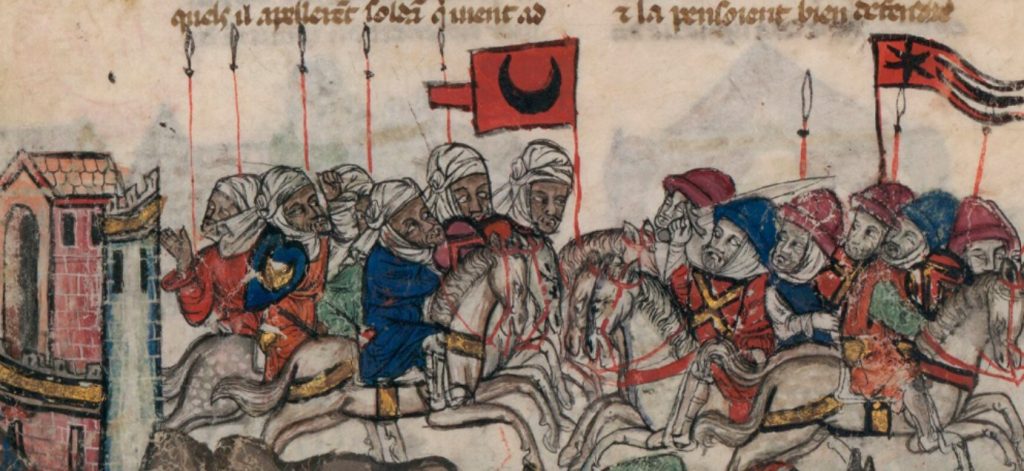
The turmoil within the community of Believers known as the ‘First Civil War’ (656-660 CE), during which several rivals claimed the position of amīr al-mu’minin after the assassination of ‘Uthman in 656, led to a lull in the outward campaigns of conquest, as the soldiers were drawn to support different claimants to lead the community and sometimes were pitted against each other. Mu‘awiya ibn Abi Sufyan (r. 660-680) of the Umayyad family emerged as the victor in this contest, and with the end of the fratricidal strife among the Believers, their outward-facing campaigning into new areas soon resumed. But from now on, the expansion movement is easier for us to understand: it can be seen fundamentally as a state-sponsored industry—a conscious policy of the Umayyad rulers, who launched regular, predatory raids designed to bring to the soldiers and their rulers plunder and tribute (including slaves), and to draw newly-conquered areas firmly within the reach of the regime’s tax-collectors. How much of a role religious zeal and a sense of “communitas” played in this phase of expansion is less clear; while these motivations may still have weighed heavily in the minds of some leaders and soldiers, what seems more obvious is the state sponsorship of these campaigns, newly possible now that the state run by the Believers led by Mu‘awiya was again stable and had begun to assume more definite institutional form. The aggressiveness and focus of expeditions in this second phase varied depending on the personality of the amīr al-mu’minīn; al-Walid I (705-715), for example, pursued robust expansion on many fronts, while his brother and successor Sulayman (715-717) seems to have reined in activity on many fronts in order to concentrate on a massive campaign against the Byzantine capital, Constantinople, which however failed to take the city.
In the East, regular raiding campaigns were dispatched in the time of Mu‘awiya, usually during the spring-summer months, from the great Iraqi garrisons of Kufa and Basra into Azerbaijan and the Iranian plateau. These campaigns seized numerous cities and towns, but were often little more than raids yielding plunder, and for a long time the Umayyads had only transitory or discontinuous control over many areas in Iran. As the eastern front became more distant from Iraq, the time it took troops to travel from Iraq to campaign in the eastern fronts became so great that already in 671 a new garrison was established closer to the frontier, in the Marv oasis (in modern Turkmenistan), and staffed with Arabian troops transferred permanently with their families from Iraq—reportedly 50,000 in number.
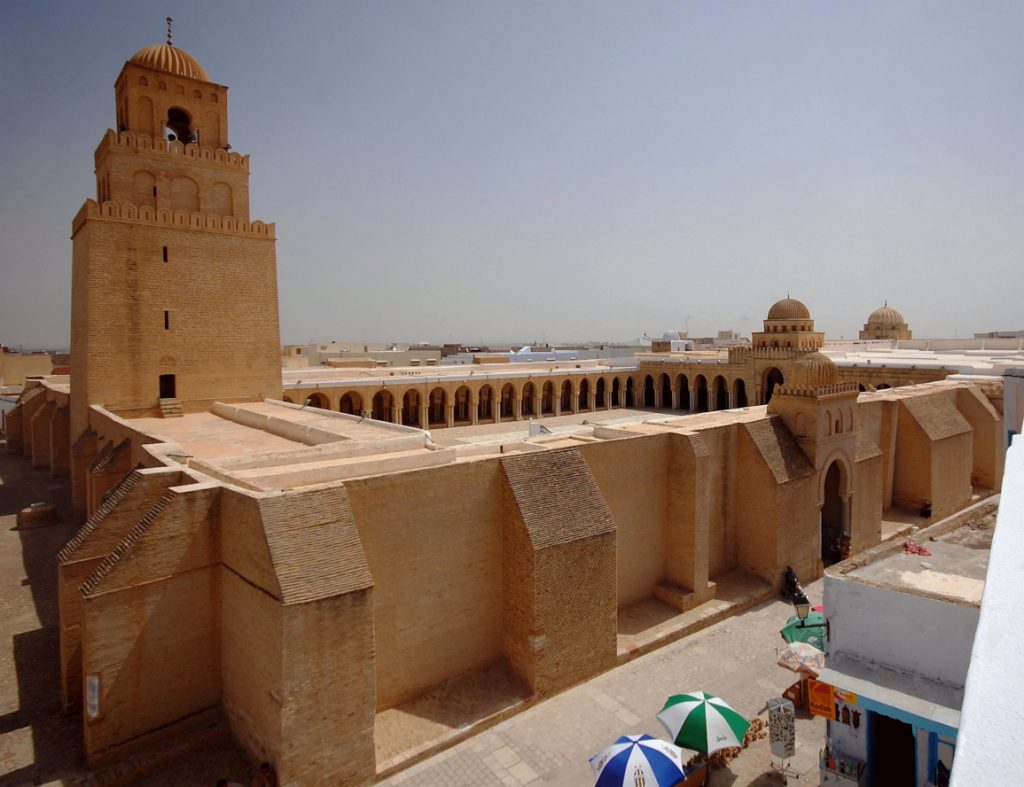
In the West, similar predatory raids were launched in Mu‘awiya’s time from the garrison at Fustat in Egypt against Libya and areas farther west in North Africa, bolstered by the creation in 670 of a new garrison town at Qayrawan (in modern Tunisia). Control of areas west of Libya, however, long remained elusive to the Umayyads.
In the North, Mu‘awiya launched annual raids into Anatolia and Armenia from the main Syrian garrison at Hims and from posts such as Massisa along the Byzantine frontier in southern Anatolia. He also once attempted (with naval support) to besiege the Byzantine capital at Constantinople (modern Istanbul), perhaps motivated by eschatological traditions that claimed that the fall of Constantinople would usher in the events of the Last Judgment. If this was its motivation, it would suggest that in certain governing circles such religious concepts carried substantial weight. These campaigns, however, waged in the name of the prophet and the Qur’an, were still not characterized by a desire to convert Christians or Jews to Islam. Indeed, the Christian author Bar Penkayé writing in the 680s in northern Mesopotamia, described the period of Mu‘awiya’s reign as one of unheralded peace, during which everyone was allowed to worship as he pleased. (He also noted that in the Believers’ campaigns of conquest sent to distant fronts some of the soldiers were Christians of various denominations.)
The death of the amir al-mu’minin Mu‘awiya in 680 CE led to a renewed period of internal strife among the Believers, which caused another temporary pause in the campaigns of conquest, because the state itself was hardly functioning. Mu‘awiya’s son and successor Yazid was not accepted by some Believers, and in any case he died after only a few years. This Second Civil War or second fitna (680-692), as it is usually called, involved a many-sided struggle between numerous claimants wishing to be amir al-mu‘minin and their backers. It was also a period of widespread misery for many people, especially common people in rural areas of Syria, Mesopotamia, and Iraq, for beside the disruption caused by fighting among rival armies of Believers, the general collapse of government authority permitted the emergence of gangs of thugs who roamed the countryside unhindered, victimizing mercilessly anyone they encountered regardless of religion, ethnicity, or social status. The final victory of the Umayyad amīr al-mu’minīn ‘Abd al-Malik (r. 685-705) over his rivals in 692 finally ended this chaos. This allowed a resumption of state-sponsored military raids, and it also led to a further consolidation of the institutions of the Believers’ state itself. Moreover, ‘Abd al-Malik and his advisers began to call themselves and their community “Muslims,” rather than “Believers.” This terminological shift was presumably intended to mark their status as a new monotheist religious confession, Islam, now clearly understood to be distinct from other monotheists (especially Jews and Christians), some of whom had earlier been included within the category of Believers. It seems also at this time—around 700 CE—that the Umayyads begin to refer to the leader of the movement as “caliph” (Ar. khalifa) rather than amir al-mu’minin. The latter phrase was of course well-established, but it was not found in the Qur’an; the word khalifa, on the other hand, was used in the Qur’an, where it referred to someone having divine guidance or favor, and hence its use gave a stamp of religious legitimacy provided by the Qur’an to the leader of the community. We can note that at this time, under ‘Abd al-Malik’s leadership, the text of the Qur’an underwent a final round of editing, the exact scope and scale of which remain unclear, but which seems to have been intended to eliminate ambiguities in how the text was read by introducing vowel marks and by standardizing versification; and under Umayyad sponsorship, the sacred text began to occupy a more prominent role in the self-conception and identity of the Muslim community.
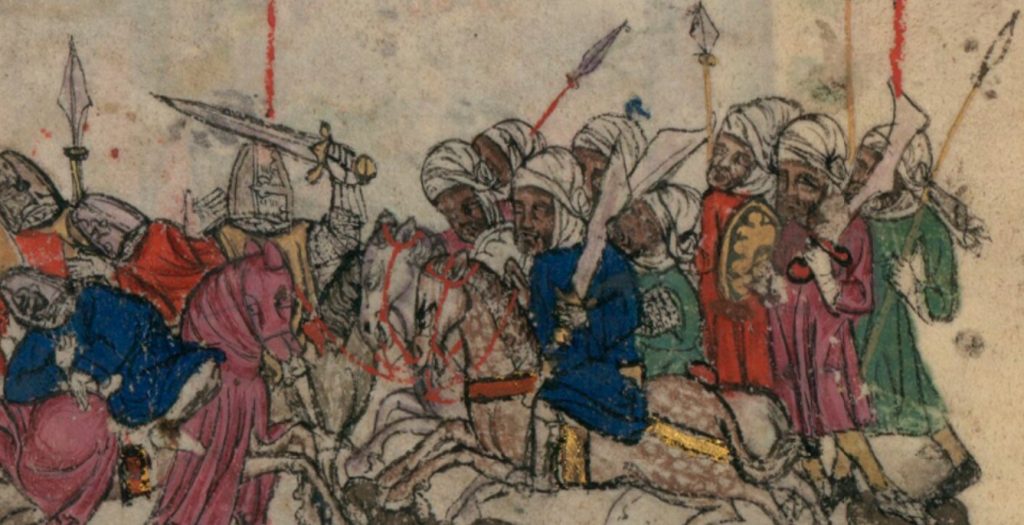
The resumption of active campaigning after the Second Civil War, allowed the armies of the Muslims—as we can now properly call them—to bring vast new areas under the control of the Umayyad state. From Syria the annual raids across the Taurus mountains into the highlands of Anatolia were resumed; these raids seem to have been intent on securing local plunder, or perhaps on keeping the Byzantine forces off balance and so to prevent them from attacking Syria, but they do not really seem to have been intended to seize and hold new territory. In 717-18, however, as noted above, the Umayyad caliph Sulayman ordered a second assault against the Byzantine capital at Constantinople. This campaign, which obviously was intended to seize new territory, was in the end unable to breach the city’s redoubtable defensive walls, even though the Muslims besieged the city for many months before having to withdraw. This particular campaign, like the first, may have been inspired in part by eschatological traditions claiming that the fall of Constantinople to the Muslims would signal the beginning of the End-Time and coming of the Last Judgment. Whether the rank and file of soldiers were motivated by such dreams is unclear, but we can probably assume that the caliph and his close advisers were influenced by such eschatological concerns to order this gargantuan enterprise. Besides the regular annual raiding into Anatolia, other forces seized and held territory in Armenia and the Caucasus.
From Kufa and especially Basra, the main garrisons in Iraq, regular (usually annual) campaigns were once again sent into unsubdued parts of the Iranian plateau, the western parts of which had already been brought under control of the Believers’ movement before the Second Civil War. Some areas of Iran, such as the thickly forested regions on the north slopes of the Elburz mountains, facing the Caspian Sea (Gilan, Daylam, Mazandaran), were deemed too difficult to subdue and for many decades remained in the hands of local warlords, who paid a nominal tribute in exchange for being left alone. More open parts of Iran, however, all the way to western Afghanistan, including most major cities, were progressively taken over by the Umayyad forces and reduced to tax-paying status. The garrison the Muslims had established at Merv was the base from which continuing campaigns were launched into Afghanistan and especially across the Oxus river into the fringes of Central Asia in the last years of the seventh century and first years of the eighth. Progress was slow, however; the region was home to many autonomous Turkic and Iranian (Soghdian) rulers, and contested by more distant great powers including the T’ang dynasty of China and the Tibetans. A forceful governor of Khurasan named Qutayba ibn Muslim was appointed by the Umayyad caliph al-Walid (r. 705-715) and was slowly able to conquer major towns on the “Silk Road,” such as Bukhara and Samarkand, through a divide-and-conquer strategy. But Umayyad rule in northeastern Iran and Transoxania continued to be threatened by local uprisings for many years. The situation was even more tenuous in southeastern Iran and western Afghanistan; though Sīstān had already been seized in the 670s, numerous campaigns in the 690s failed to subdue Zabulistan, and Umayyad control ceased beyond towns like Zarang and Bost, on the western fringes of the Afghan highlands. The most distant conquest in the East was that of Sind (the Indus River valley in modern Pakistan). There, local Hindu rulers who may have interfered with Muslim merchants coming from Iraq were defeated by an army sent by the powerful Umayyad governor of Iraq, led by his teenaged nephew Muhamad ibn al-Qasim in 711-713. Reliable information about this early Muslim settlement in Sind is sparse, but it does seem to have survived long among a population that was overwhelmingly Hindu with a significant Buddhist minority. The conversion of most of Sind to Islam did not get underway until much later, in the eleventh century.
The expansion of the Umayyad caliphate westward into North Africa paralleled in some ways that into Iran and the East. As noted, campaigns had been sent west from Egypt already in the first phase of the conquests, taking control of the Libyan coast and reaching as far as Ifriqiya (the former Roman province of Africa—ancient Carthage), roughly modern Tunisia, with its new garrison town at Qayrawan. Qayrawan served as the springboard from which successive Umayyad governors of Ifriqiya launched further campaigns across western North Africa (modern Algeria and Morocco, north of the Sahara desert) in the years after the end of the Second Civil War. It also grew into the largest city in all of North Africa west of Egypt, the crucial center not only for the Umayyads’ control of their westernmost territories, but also for the study and propagation of the Islamic faith (particularly in its Maliki-Sunni form) into those regions.
But, as in the east, the expansion of Umayyad control into North Africa was halting; it suffered numerous setbacks because of resistance from various groups in the local Berber (Amazigh) population. The Berber chief Kusayla led a stubborn uprising in the 680s that resulted in the defeat and death of the Muslim governor, ‘Uqba ibn Nafi‘, and that even for a time seized Qayrawan. A new Arab force dispatched from the east was able to retake Qayrawan and finally defeat Kusayla. The Arabs then undertook the difficult task of conquering Carthage, which had remained a Byzantine stronghold along the coast and so presented the danger that a Byzantine fleet could bring forces to attempt a Byzantine reconquest of the area. After changing hands several times, Carthage was finally taken definitively in 694. Another troublesome uprising by a Berber force in the Aurès mountains, however, led by a woman called al-Kahina (evidently a Berber prophetess), kept the Umayyad forces off balance until her defeat and death in 702.
With the province of Ifriqiya finally subdued, a new governor, Musa ibn Nusayr, launched campaigns into the western Maghrib (modern Algeria and Morocco), which seems to have been rather quickly brought under his control. It was from strong points in North Africa, such as Tangiers, that the conquest of Iberia was begun in 711; this will be discussed in greater detail in the next section.
The second stage of the Islamic conquests, in both East and West, were thus marked by certain similarities. Military campaigns launched after the end of the Second Civil War (starting around 692) were a lucrative enterprise assiduously cultivated by the Umayyad caliphs, in that they seized much booty (including slaves) to be divided among the soldiers and partly shared with the Umayyad rulers; but they also had the broader objective of bringing new areas firmly under Umayyad control and subjecting them to regular taxation.
In considering these conquests, it is important to distinguish between two different processes, which generally occurred on different time scales. One was the spread of political control or state sovereignty, which despite setbacks usually happened quite quickly. The other was the spread among the general population of Islam as a religion, which generally happened much more slowly. Newly conquered populations were required to submit and pay tribute or taxes to the Umayyad state, but were not required to embrace Islam (unless they were polytheists, who were by this time very few)—rather, conquered peoples were allowed to continue practicing their former religions (usually Christianity, Zoroastrianism, or Judaism) as dhimmis, or “protected peoples/communities.” In both East and West, these efforts at expansion were remarkably successful in the long run, but were initially halting and sometimes faced stubborn resistance by local rulers and populations. Early military commanders such as Qutayba ibn Muslim in the East and ‘Uqba ibn Nafi‘ in the West became also governors of newly conquered provinces. They were thus tasked both with organizing the military campaigns aimed at further expanding the frontiers of the caliphate, and with simultaneously establishing firm civil administration over the areas they had conquered.
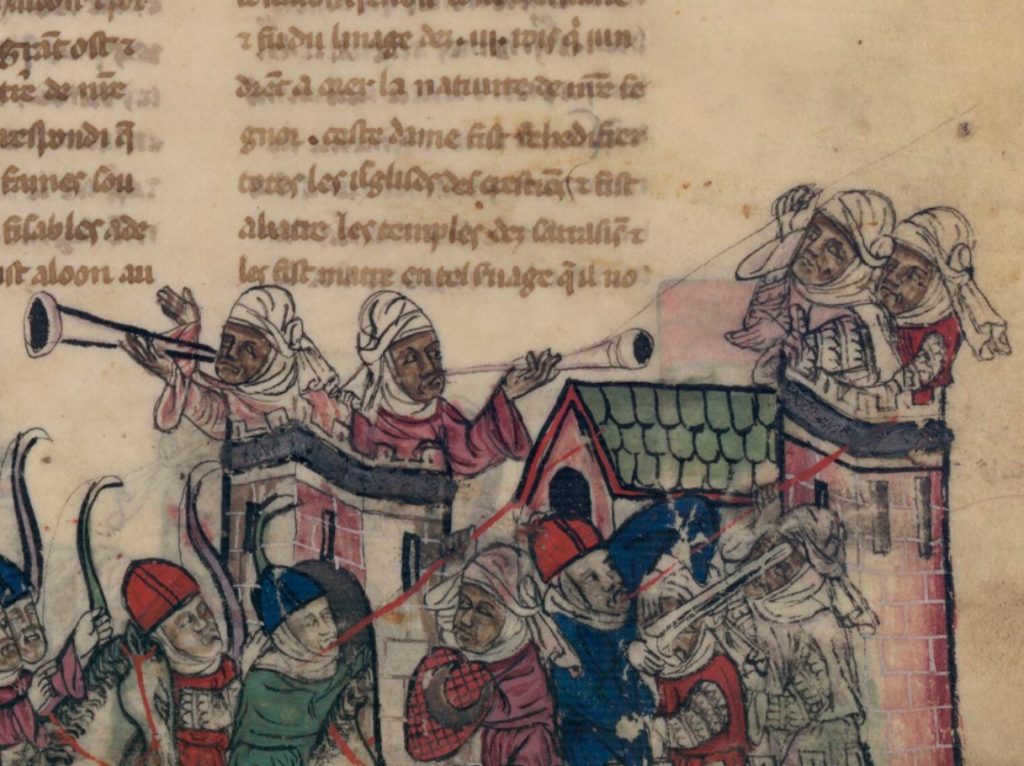
North Africa, however, responded to the Umayyad expansion in one respect quite differently than the newly conquered territories in Iran and the east. In Iran and adjacent areas, conversion to Islam proceeded at first quite slowly; in the West, on the other hand, the majority of the Berber population, especially those who were not Christians, appears to have embraced Islam quite quickly. Many Berbers became clients of Muslim soldiers and commanders, and by the end of the seventh century many were finding their way into service as mercenaries in the Umayyad armies. Berber converts, however, were routinely treated as inferiors by the Arab commanders and soldiers who formed the core of the Umayyad armies. Perhaps for this reason, many Berber converts came to embrace one of several branches of Kharijism, a form of Islam that was intensely egalitarian and pietistic, and which spread rapidly in the North African countryside. (Qayrawan, however, remained a bastion of Sunni Islam). This development had momentous consequences some decades later, when in the 740s there occurred what are usually called the great “Berber revolts” against Umayyad rule in the Islamic West–in which ethnic rivalry and resistance to anti-Berber discrimination were legitimized by Kharijism’s egalitarian ideology.
The Conquest of Al-Andalus
By the early eighth century, the long process of extending Umayyad rule over North Africa had been underway for more than a half-century, with many starts and stops caused by the region’s immense distance from the center of the caliphate in Syria, by the interruption caused by the Second Civil War in the east, and by the bitter resistance of many local Berber groups to domination by the caliphal armies and their mainly Arab troops. As noted, however, once subdued, many Berbers embraced Islam and joined the armies as soldiers. The Muslim forces in the Umayyad province of Ifriqiya thus came to consist, by the early eighth century, of a core of soldiers and commanders of Arab origin who had come from lands further east, joined by many newer Berber contingents. With the relative pacification of North Africa, however, came the need for the armies in Ifriqiya to find new outlets for the desire of the troops to secure plunder.
Across the strait of Gibraltar, the Visigothic kingdom of Hispania fell into disorder in 710 following the death of the Visigothic king Witiza. His successor, Roderic, evidently did not enjoy the support of all the Visigothic aristocracy, resulting in months of internecine strife among different claimants to the Visigothic throne. The reports about the first invasion of Iberia by the Berber sub-governor of Tangiers, Tariq ibn Ziyad, in 711, and by his superior, the governor of North Africa Musa b. Nusayr, are confused. Tariq and Musa had made brief raids on the coast of Spain even before Witiza’s death. After it, some reports suggest that Tariq was invited into the civil strife in Iberia by one of the contenders for Visigothic leadership, but whether or not this is true really does not matter, for the political turmoil and breakdown of central power in a state just a few miles across the straits from Ifriqiya would have in any case been irresistibly attractive to the Umayyad forces, who had long been intent on expanding their control over lucrative new territories. It may be, therefore, that the expansionist imperative played a role, so that that Tariq launched his fateful attack on Roderic’s army in part to keep his soldiers busy by exploiting the unrest nearby. It seems unlikely that religious motivations were the main factor in the Umayyads’ decision. Tariq’s decisive defeat of Roderic’s army, however, and the consequent collapse of central Visigothic rule led to the arrival of further Berber forces and of an Arab force let by the governor of ifriqiya, Musa b. Nusayr. These forces moved swiftly into the center of the peninsula, taking over the main towns, including the former Visigothic capital at Toledo. The conquerors quickly began to settle in various parts of Spain, however—the Arab troops mainly in a few major cities, while the Berbers established themselves in smaller towns and in the countryside—something possible because of the large number of Berber soldiers in the invading forces. Within a few years, between 711 and 715, forces directed by Musa and his son and successor ‘Abd al-‘Aziz subdued most of southern and central Spain. They even established outposts of Arab or Berber troops as far as the coast of the Bay of Biscay and Galicia in the north-west, which, however, proved to be ephemeral and were soon abandoned after the coalescence of a small Christian kingdom in Asturias. Within a few more years, Arab forces occupied the remaining parts of the former Visigothic kingdom, around Zaragoza and Barcelona in the north-east of Spain, and by 719 in the area around Narbonne in southern France. Only the mountainous north of Spain successfully resisted the advance of the Muslim forces, perhaps because (as in North Africa) the local mountain communities in the Pyrenees, Cantabria, Asturias, and Galicia were less easily subdued than cities and towns of the open plains, which fell rapidly once the Visigothic political leadership had been broken.
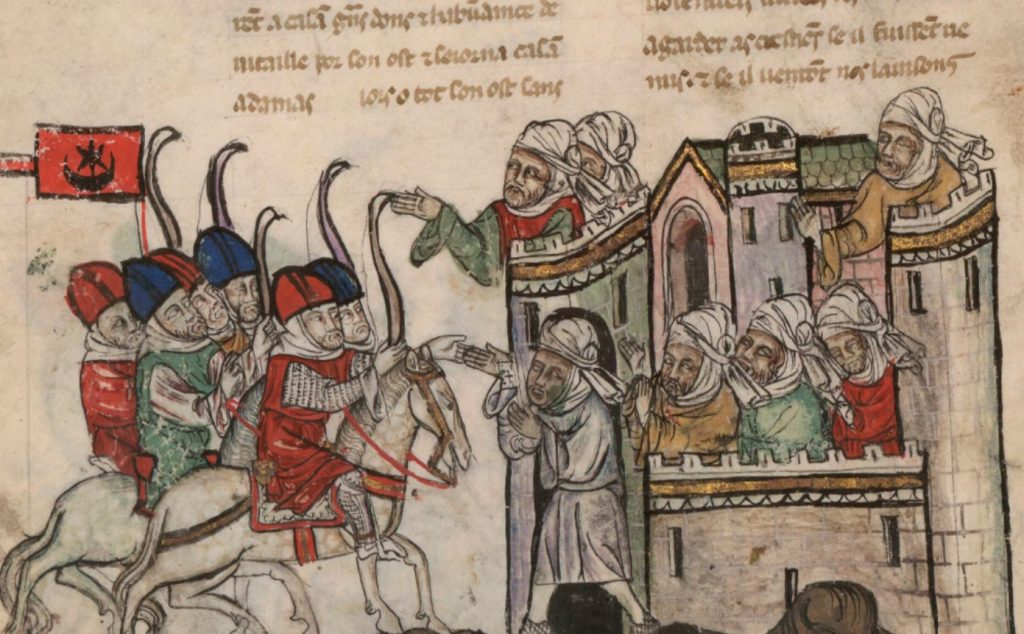
A few towns in Spain (such as Cordoba) resisted and were conquered by force, which usually involved execution of adult males and enslavement of women and children, but most cities and towns appear to have made terms with the conquerors. The rapidity of the conquest in most areas may have been partly because the Visigothic kings had maintained only a relatively small royal army and for major campaigns had relied heavily on regional contingents belonging to members of the Visigothic aristocracy. Once the army of Roderic was eliminated, the remaining members of the nobility thought it more prudent to make terms with the larger Umayyad armies rather than to resist; some Visigothic nobles subsequently served the Muslims as tax-collectors, doubtless over districts they had long themselves dominated as feudal lords. A few surviving texts show that treaty agreements involved, among other things, guarantees of security for life and property of the inhabitants in exchange for their obedience and payment of tribute. Within several years, the conquerors established a regime of regular taxation over these territories, which became a vast new sub-province of the Umayyad province of Ifriqiya that came to be called al-Andalus (a word of disputed origin).
Some have recently proposed that there was no Muslim conquest of al-Andalus, but rather that a process of quiet conversion to Islam among the people of Hispania was subsequently “explained” by the back-projection of a spurious story of conquest by the Muslims. Such a view, however, puts the cart before the horse: as elsewhere, it was the conquest that in fact resulted, eventually, in widespread conversion to Islam. A number of indicators make clear that the expansion into Iberia was an organized and intentional conquest by the Umayyad caliphate, even though it may have initially begun as opportunistic raiding. First, we can note that the earliest source describing the Arab conquest of al-Andalus, the Chronicle of 754, written by an unknown Christian author, clearly describes the events as a conquest, not as a quiet movement of religious conversion. We can note also the rapidity with which the initial victory by Tariq was followed by successive campaigns ordered and in some cases led by Musa, the governor of Ifriqiya, and his successors. The several years of initial campaigning by several Umayyad armies, moreover, did not simply to take plunder and captives and then return with their booty to their secure bases in North Africa, but rather aimed at establishing a new Umayyad province to replace the regime of the Visigoths (who had, like the Arabs, come as a foreign conquering elite to Spain some 300 years earlier). That this was a planned conquest is also reflected in the fact that the conquerors began almost immediately issuing new coins in al-Andalus, and within a few years organized a tax system to exploit its agrarian resources. The frequent changes of commanders and sub-governors in al-Andalus, ordered by the Umayyad governor of Ifriqiya in Qayrawan or by the distant Umayyad caliph in Damascus, also suggests that the assault on Spain was something that the Umayyads saw as a priority and were eager to pursue with a view to incorporating all the territories of the former Visigothic state of Hispania into the caliphal domains. As part of their intended plan of regime change, the Umayyad conquerors apparently strove to reduce the standing of the former Visigothic capital, Toledo, to thwart any attempt at a Visigothic restoration. This they did by establishing their own centers of rule elsewhere, garrisoned by contingents of Berber or Arab troops—notably at Cordoba and Sevilla in the rich Guadalquivir valley, and later also at Zaragoza and Narbonne in the north
Once the Umayyads and their forces were established securely as the new rulers of al-Andalus, it is not surprising that both their official language, Arabic, and their religion, Islam, would begin to spread among the subject population, since Arabic and Islam enjoyed the prestige associated with the new ruling elite, but as in most other lands affected by the early Islamic conquests these processes of Arabization and Islamization followed the conquests—they did not precede them.
Concluding Reflections
As noted in the preliminary remarks, the conquests that occurred with the rise of Islam have sometimes been used as a shorthand expression to cover a wide variety of developments (political, social, linguistic, religious, ethnic) that were associated with but far transcended the basic military campaigns themselves. Some of these have been addressed briefly in the preliminary remarks above, such as the debate over what kind of movement the initial conquests represented, and how it was possible for them to get started and to succeed despite meager material resources and institutional structures in Arabia to support them.
Equally important are the many changes that came in the wake of the conquests, to which we turn our attention here. These various changes could be quite different depending on the region under consideration, and some have already been mentioned in passing above. One is the degree to which the conquests were related to migrations of people and demographic change. Older theories assumed that the conquests were the result of, or part of, an outpouring of Arabians from the peninsula into the surrounding lands, but it is now clear that the earliest conquests began not as tribal or folk migrations, but as campaigns by the military forces of an embryonic new state; indeed, after the initial wave of conquests, the early commanders found that many parts of Arabia were quite depopulated and not able to provide new recruits to the army. It is true that in areas adjacent to Arabia, once the first armies had conquered a new territory, its conquest was sometimes followed by substantial migration into that territory by new people coming from Arabia. Iraq and Egypt, for example, received large numbers of Arabian migrants in the seventh century, who at first settled mostly in the garrison towns at Kufa, Basra, and Fustat. As these garrisons grew into major cities with the arrival of the families of soldiers and others from Arabia, they developed into important centers of a new Islamic high culture in literary Arabic. In geographical Syria, where a substantial part of the population was already Arabic-speaking before the conquests, new migrants from Arabia seem to have been fewer and settled mostly in abandoned parts of existing towns; some evidence suggests that the early caliphs and their associates from the prophet’s tribe of Quraysh, who dominated the early state, wished to reserve settlement in Syria for their own kin, and directed migrants from other Arabian tribes go to either Iraq or Syria. Most towns of Syria probably received relatively few immigrants in the century after the conquests (who, however, occupied dominant positions as the conquering elite), the main exception being the city of Hims, which served as the Umayyads’ main military base there. In the east, after the defeat of the Sasanian armies and the collapse of the Sasanian state, Iran and areas farther east in the seventh century were subjected to regular (often annual) Arab military campaigns sent out from the Iraqi garrisons, especially from Basra. These forces, however, generally returned to their base in Iraq after months of campaigning, and Arab settlement within Iran was very limited; the main exception was in the new garrison town in the Merv oasis in northeastern Iran (in modern Turkmenistan), where tens of thousands of Arab troops and their families were sent in the later seventh century, to consolidate Umayyad rule in the area and to facilitate raids and campaigns beyond Iran into the fringes of Central Asia. Spain, on the other hand, saw a completely different pattern. The rapid conquest of the Visigothic state by armies from the Umayyad province of Ifriqiya starting in 711 resulted in the immediate settlement in many parts of the Iberian peninsula of large numbers of Berber and some Arab soldiers and their kin. This profoundly affected the later political and cultural history of the peninsula, especially because, as in North Africa, the Arabs treated the Berbers, despite their conversion to Islam, as of lower status. This was a main cause of the massive Berber uprisings of the 740s in Spain and North Africa, which apparently were not intended to overthrow Umayyad rule but rather aimed to make it more equitable for Muslims of non-Arab origin, in keeping with the egalitarian message of the Qur’an. It was in response to these Berber uprisings that the caliphs dispatched larger forces of Arab (mostly Syrian) troops to Spain in the 740s, to bring these rebellions under control—new Arab settlers who became the backbone of the later independent Umayyad emirate and caliphate after 756.
Another important set of consequences ensuing from the conquests, touched on in passing above, involved the two social processes of Arabization (adoption of the Arabic language as a spoken or written language) and Islamization (adoption of the religion of Islam), which are logically separate but often confusingly intertwined, both in scholarly discussion and in social reality. It is sometimes difficult to get a sharp sense of the course of these processes from the available sources, but we can be sure that, once again, they varied significantly from region to region. In Syria and Iraq, for example, both of which had substantial Arabic-speaking populations before the rise of Islam, the earlier vernaculars (generally forms of Aramaic) seem to have become almost completely displaced by spoken Arabic everywhere within five or six centuries; this is hinted at by the first emergence of Aramaic-Arabic dictionaries around the tenth century. As to religious conversion, it has been plausibly estimated that half the population in Syria and Iraq, hitherto overwhelmingly Christian, had embraced Islam within three centuries of the conquest. In Iran, on the other hand, while conversion proceeded at a similar pace, or perhaps even more quickly, Arabization never really happened. Except for isolated pockets where Arabic was spoken, the local populations clung to their Iranian forms of speech and in time there emerged a modified form of it called “New Persian.” New Persian (which today is usually simply referred to as Persian) was a new literary language that retained the structure and grammar of Iranian languages but incorporated a vast number of loan-words borrowed from Arabic, and was written in the Arabic script, reflecting Arabic’s status as the prestige language of administration and of most high culture following the conquests, until about the eleventh century, when New Persian began to crystallize as a literary language. In North Africa, the Berber populations seem to have embraced Islam very quickly, but continued to speak different Berber languages. For several centuries, Arabic seems to have been limited to the main garrisons in North Africa, especially Qayrawan, which as noted developed into an important center of Arab-Islamic culture. Spoken Arabic appears to have become more widespread in North Africa only after the migrations of the Hilal and Sulaym tribes from western Arabia and Egypt in the eleventh century; but Arabization never succeeded completely in North Africa, and different forms of Berber are still living languages today in many areas. In Spain, the status of Arabic as the language of state administration and Muslim high culture following the conquest appears to have caused a substantial number of people to adopt it as a spoken language and as a written language in the eighth to tenth centuries, especially in cities among those who were culturally literate. Some of these Arabic-speakers may have been Spanish converts to Islam, but the existence of Mozarabic psalters and other Christian works in Arabic language shows that some Christians in Spain under Muslim rule were using Arabic even in religious contexts and presumably spoke it in daily life. As the political fortunes of the Islamic regimes in Spain faltered during and after the eleventh century, however, Arabic increasingly lost ground to Romance dialects, which however (like New Persian) emerged from centuries of Muslim rule laden with many Arabic loan-words. As Berber was not generally a written language (or at least had no developed literary tradition), it is difficult to know the degree to which indigenous populations in Spain may have come to speak Berber, or whether the Berber settlers came to speak either Arabic or some Iberian Romance dialect. The many different phenomena touched on briefly above should make clear why “the conquests,” however we wish to characterize them, can be considered one of the most consequential events in recorded human history, with repercussions that remain with us even today, fourteen centuries after they occurred.
Further reading:
The works listed here offer clear presentations of some of the material described in the foregoing essay. The selection represents only the tip of the iceberg, as thousands of books and articles have been written on all the phenomena subsumed under the rubric of “the conquests,” and new works appear constantly.
- Bulliet, Richard W., Conversion to Islam in the Medieval Period: an essay in quantitative history (Cambridge, MA: Harvard University Press, 1979). An ingenious effort, largely persuasive, to address the difficult problem of tracing the pace of conversion to Islam.
- Collins, Roger, The Arab Conquest of Spain, 710-797 (Oxford: Basil Blackwell, 1989). A readable account of the conquest, marred by its refusal to integrate Arabic sources into its analysis.
- Clarke, Nicola, The Muslim Conquest of Iberia. Medieval Arabic narratives (London and New York: Routledge, 2012). Detailed study of the various Arabic sources for the conquest of al-Andalus.
- Donner, Fred M., The Early Islamic Conquests (Princeton: Princeton University Press, 1981). Views the conquests as part of a process of incipient state-formation, with a religious focus.
- _____, “Centralized Authority and Military Autonomy in the Early Islamic Conquests,» in Averil Cameron (ed.), Studies in Late Antiquity and Early Islam, 3: States, Resources, and Armies. (Princeton: Darwin Press, 1995), 337-60. Describes the hierarchy of conceptual, strategic, and tactical command during the conquests.
- _____, “Dīn, islām, und muslim im Koran,” in Georges Tamer (ed.), Die Koranhermeneutik Günter Lülings (Berlin: De Gruyter, 2018), 129-40. Explores how the Qur’anic usage of some key terms in the Qur’an differs from the meaning given them in later Islamic tradition.
- _____, “From Believers to Muslims: Patterns of Communal Identity in the Early Islamic Community, “ Al-Abhath 50-51 ( 2002-2003), 9-53. Makes the case that Islam began as a movement open to many monotheistic Believers, including Christians and Jews.
- _____, Muhammad and the Believers: at the Origins of Islam (Cambridge, MA: Harvard University Press, 2010). General overview of how Islam began.
- _____, Narratives of Islamic Origins: the Beginnings of Islamic Historical Writing (Princeton:
- Darwin Press, 1998). Views the Muslim conquest narratives as part of a broader process of legitimation in the Islamic community.
- _____, “The Qur’anicization of Religio-Political Discourse in the Umayyad Period,” Révue des Mondes Musulmans et de la Mediterranée 129 (2011), 79-92. How vocabulary from the Qur’an (7th century) was mobilized by Muslim scholars of later centuries to legitimize certain post-Qur’anic phenomena.
- _____, “Talking about Islam’s Origins,” BSOAS (Jan. 2018), 1-23. Discusses problems with sources and terminology relating to Islam’s beginnings.
- _____, “Visions of the Early Islamic Expansion: Between the Heroic and the Horrific,” in Nadia Maria El Cheikh and Shaun O’Sullivan (eds.), Byzantium in Early Islamic Syria (Beirut and El-Koura: American University of Beirut and University of Balamand, 2011), 9-29. How Muslim and Christian sources, for different reasons, emphasize the military aspect of conquest rather than accommodation, cooperation, or concession.
- Garcia-Sanjuan, Alejandro, “Denying the Islamic conquest of Iberia: A historiographical fraud,” in Fancy and Garcia-Sanjuan (eds.), What was the Islamic Conquest of Iberia? In Hussein Fancy and A. Garcia-Sajnuan (eds.), What was the Islamic Conquest of Iberia? Special issue of Journal of Medieval Studies 11/3 (2019), pp. 306-22. The title says it all.
- Hoyland, Robert G., In God’s Path: the Arab conquests and the creation of an Islamic empire (Oxford and New York: Oxford University Press, 2015). A clear overview of the long course of the conquests, arguing that it was part of a process of Arab ethnogenesis and (title notwithstanding) downplaying the role of religion.
- Kaegi, Walter Emil Jr., Muslim Expansion and Byzantine Collapse in North Africa (Cambridge and New York: Cambridge University Press, 2010). A comprehensive study of events in North Africa, based on careful analysis of Greek and Arabic sources.
- Kennedy, Hugh, The Great Arab Conquests: How the Spread of Islam Changed the World We Live In (Philadelphia: Da Capo, 2007). An excellent overview of this vast phenomenon.
- _____, Muslim Spain and Portugal. A political history of al-Andalus (London: Longman, 1996). Lucid, sensible, and relying on both Arabic and Western sources.
- Manzano Moreno, Eduardo, “Conquest and Settlement: what al-Andalus can tell us about the Arab expansion at the time of the Umayyad caliphate,” in Andrew Marsham (ed.), The Umayyad World (London and New York: Routledge: 2021), pp. 314-31. A clear and brief distillation of key findings from the next work.
- _____, Conquistadores, Emires y Califas. Los Omeyas y la Formación de al-Andalus (Barcelona: Crítica, 2006). The best survey of the Umayyads in Spain, noteworthy for its clarity and its use of numismatic and archaeological evidence to supplement the literary sources.
- Shaddel, Mehdy, “Periodisation and the futūḥ; Making Sense of Muḥammad’s Leadership of the Conquests in Non-Muslim Sources,” Arabica 69 (2022), 96-145. Explores the relationship of the early conquests to other aspects of Islam’s rise.